The Spiritual Toolbox
Rowan Berries | Protection - Evil Eye - Warding - Psychic Protection - Divination
Rowan Berries | Protection - Evil Eye - Warding - Psychic Protection - Divination
Couldn't load pickup availability
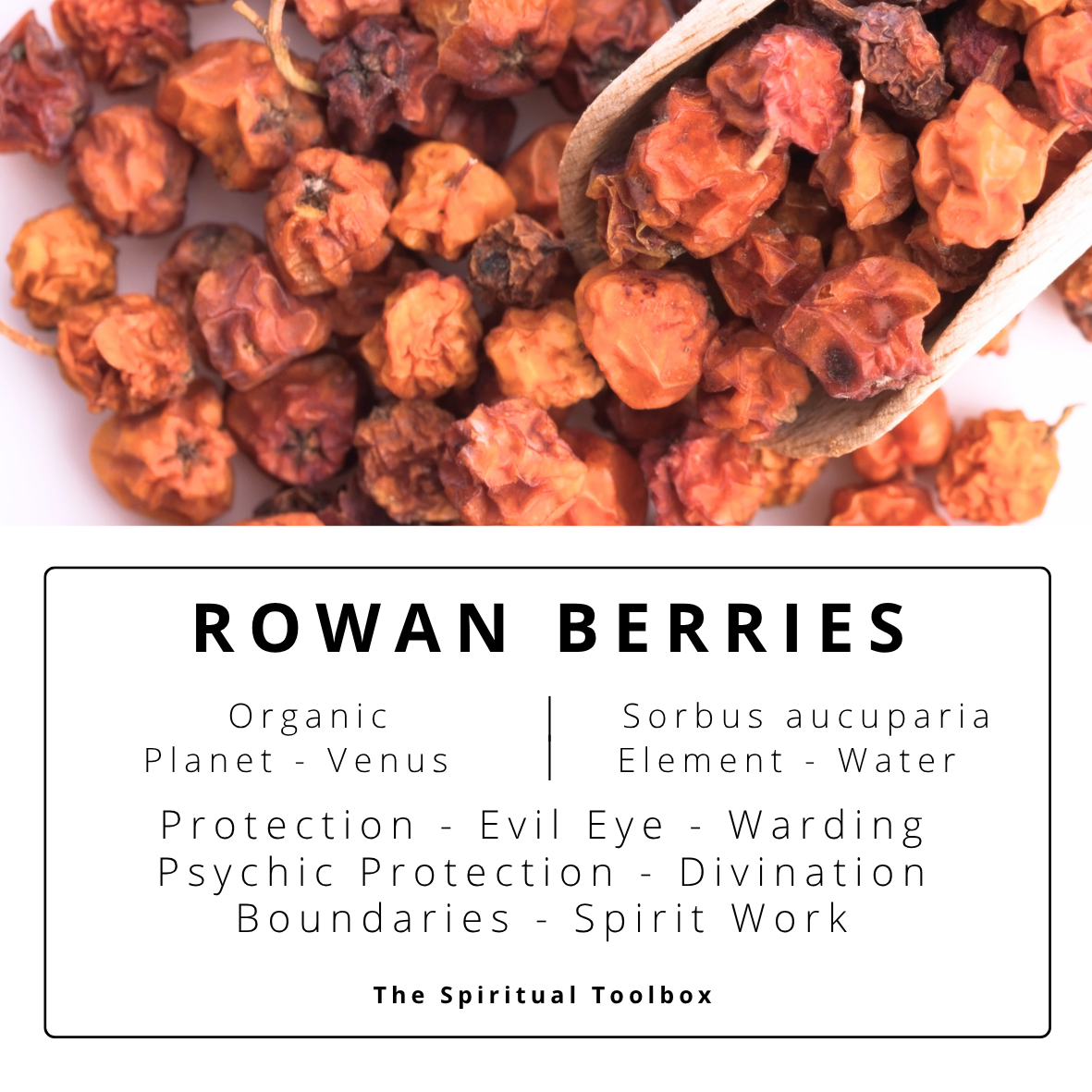
Rowan Berries - Sorbus aucuparia
Protection - Evil Eye - Warding - Psychic Protection - Divination - Boundaries - Spirit Work
Rowan has a long-standing reputation across European folk traditions as a tree of protection. It shows up consistently in Scottish, Irish, and Norse practice as a boundary plant, something placed between the home and whatever might try to cross into it.
The bright red berries were used in charms, carried on the body, or fixed near doorways and windows to ward off unwanted influence, particularly the Evil Eye and spirit interference.
In Norse tradition, rowan was associated with the god Thor and was sometimes referred to as his protection. In parts of the British Isles, it was commonly planted near homes or livestock to prevent enchantment or misfortune. The logic is consistent across regions. Rowan marks a boundary and reinforces it.
The berries themselves are often strung into charms, traditionally in sets or patterns, to create a portable ward. Combined with red thread or natural fibre, they form a simple but effective protective tool. It’s not elaborate, and it doesn’t need to be. Rowan works by presence, not performance.
- It is used in divination and spirit work, particularly where protection is required.
- Thread rowan berries onto string or twine to create a hanging protective charm
- Hang above doorways, windows, or entry points to ward off unwanted influence
- Carry as a personal charm for protection against psychic interference or the Evil Eye
- Add to protective sachets or boundary work where reinforcement is needed
- Use alongside divination or spirit work to maintain control and stability
Packaging: Our herbs are packaged in 100% biodegradable bags with compostable labels. All apothecary items are filled by volume, not weight. The quantity received depends on the cut, weight, and density of each herb. Typical fills range between approximately 3g-40g depending on the herb and selected unit price.